“I can calculate the motions of heavenly bodies, but not the madness of people!”– Isaac Newton
“A large part of all the social action in which many individuals take a concerted part is impulsive rather than deliberate; and, therefore, many of the dramatic events of history have been impulsive social actions.” – Giddings
“… the market has its law, just as is true of other things throughout the universe. Were there no law, there could be no center about which prices could revolve and, therefore, no market. Instead, there would be a a daily series of disorganized, confused price fluctuations without reason or order anywhere apparent. A close study of the market, however… proves this is not the case. Rhythm, or regular, measured, and harmonious movement, is to be discerned. This law behind the market can be discovered only when the market is viewed in its proper light, and then is analyzed from this approach.” – Ralph Nelson Elliott
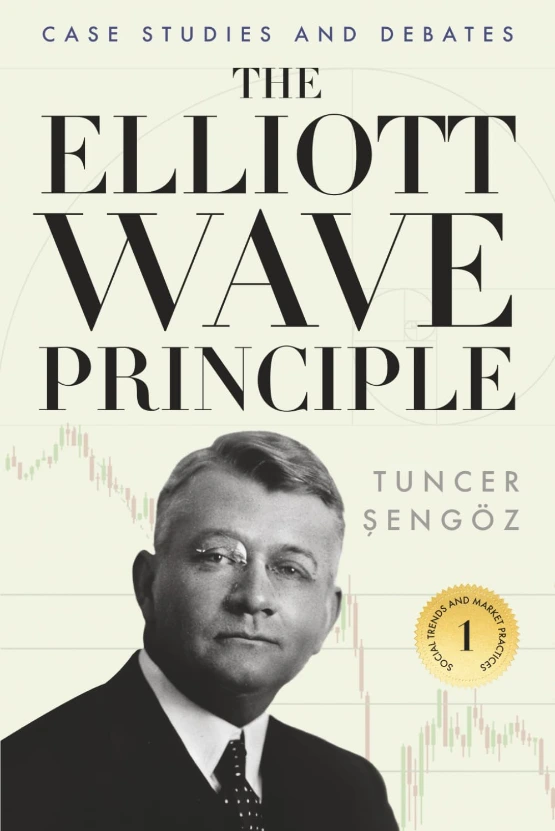
Tuncer Şengöz’s book, Elliott Wave Principles, published in 2002, attracted great interest in investment circles and became one of the most important reference sources on the subject. In this book, Şengöz not only introduces the basic rules and guidelines of the theory with new and up-to-date charts, applications, and discussions, but also offers the reader a brand-new perspective by interpreting Elliott waves in their scientific and philosophical dimensions.
“When we examine history through the lens of the Elliott Wave Principles, we can easily identify the ups and downs of waves, much like the fluctuations reflected in stock market graphs. This observation invites us to have the courage to speculate about where we are historically. Because if the waves, at both the smallest and largest scales, consistently rise and fall within similar fractal structures, then the place we currently occupy must be situated within a larger fractal pattern. What might this place be?” (Excerpt from the book)